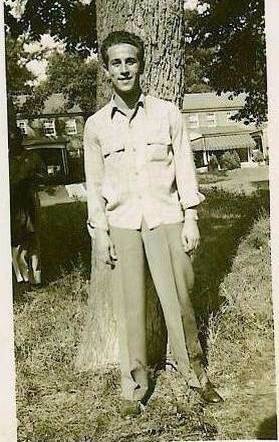
Baltimore knew Eli “Ted” Hanover as a promoter in later decades. Long before the posters and packed fight nights, however, he was a young featherweight willing to step between the ropes and test himself against another fighter.
Baltimore was a fight town
During the 1930s, boxing had a place in the city's working-class sporting life. Local fight cards brought together young athletes, trainers, managers, and spectators. Neighborhood identity mattered; so did the chance to earn a place on a bill and prove oneself before a crowd.
Eli came to the sport from a large East Baltimore household. The project research places his first professional appearances in 1939, while he was still in his teens if the family-reported 1921 birth year is used. His boxing career was brief, but it made the ring more than a spectacle to him. It became a workplace he understood from experience.
Carlin's Park: a stage for young fighters
Carlin's Amusement Park appears in the historical research as a principal setting for Eli's early fights. An amusement park fight card offered something different from a championship arena: an audience could come for an evening's entertainment and discover aspiring local boxers on the undercard.
For an emerging featherweight, those contests were opportunities to build a record and learn the realities of the professional circuit. We have not yet matched each reported bout to a dated primary-source program or newspaper result, so this chapter does not assign specific opponents or outcomes to Carlin's Park without confirmation.
Eight reported bouts
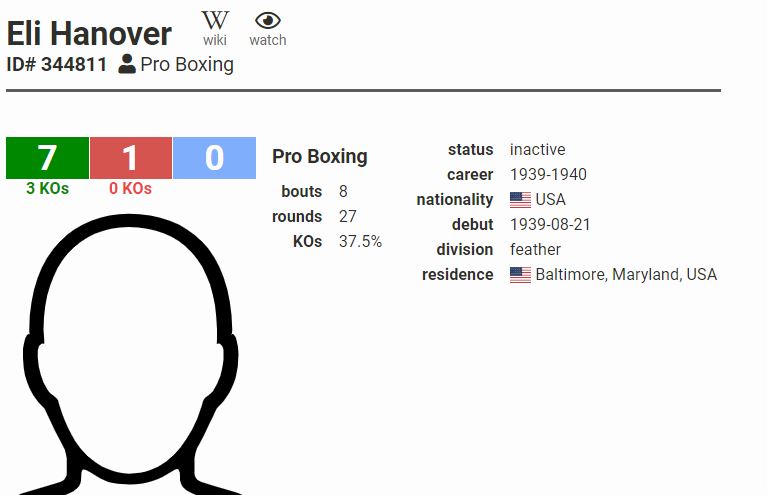
The research compilation gives Eli a professional record of seven victories and one defeat in eight fights during 1939 and 1940, including three knockout wins. It also reports an August 21, 1939 debut. These are useful working figures, not a newly audited fight ledger.
A reliable bout-by-bout history will require checking names, dates, locations, decisions, and boxing-record databases against period newspapers and surviving fight programs. Until that reconciliation is complete, we present the summarized record rather than an invented list of matches.
“I wasn’t no great fighter… I was just a preliminary boy.”
The quotation is reproduced from the project research compilation; its original interview or publication should be checked before final publication.
What the ring taught him
There is a difference between watching a fight and preparing to fight. Even a short professional career exposed Eli to the routines of training, the uncertainty of earning a spot on a card, and the risks a boxer accepted each time he entered the ring.
Decades later, when he opened a gym and arranged events for Baltimore fighters, he did so as someone who had stood in their position. We should be cautious about assigning particular philosophies or motivations to him without direct testimony. Still, his own time as a boxer is an essential part of the story of how he became a promoter.
Early ring years · working timeline
- Late 1930sYoung Eli enters Baltimore's local boxing scene.
- Aug. 21, 1939Professional debut date reported by the research compilation.
- 1939–1940Eight professional bouts and a 7–1 record reported; individual results need independent checking.
- Early 1940sHis life turns toward wartime maritime service, the subject of Chapter 3.
From the chapter archive