The boxing posters record the nights Eli Hanover brought a crowd together. His family and friends remember the person who came home afterward. This concluding chapter brings those histories into conversation.
A city and a family
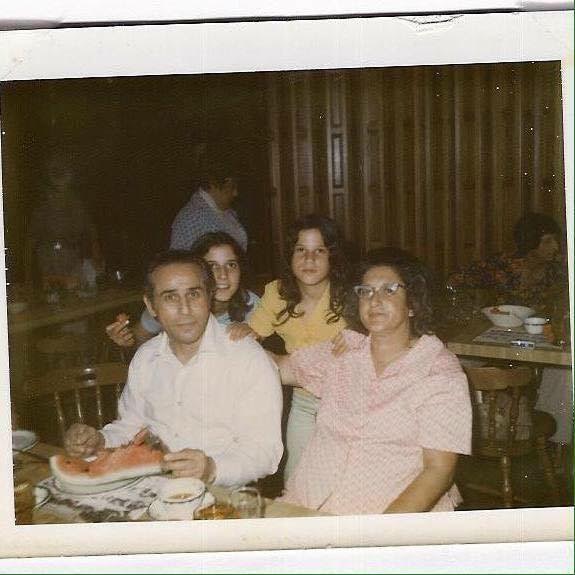
Baltimore was more than the backdrop to Eli Hanover’s public life. It was home: the place where he and Frances raised nine children, where relatives gathered, where an evening out might mean dinner, a movie, or time together watching television. Family recollections describe outings to local eateries and occasional visits to Pimlico. Those memories suggest another side of the energetic man associated with boxing cards and The Block—one that deserves to be recorded in the words of those who knew him.
 Archive image not available locally
The Block, beyond the headlines
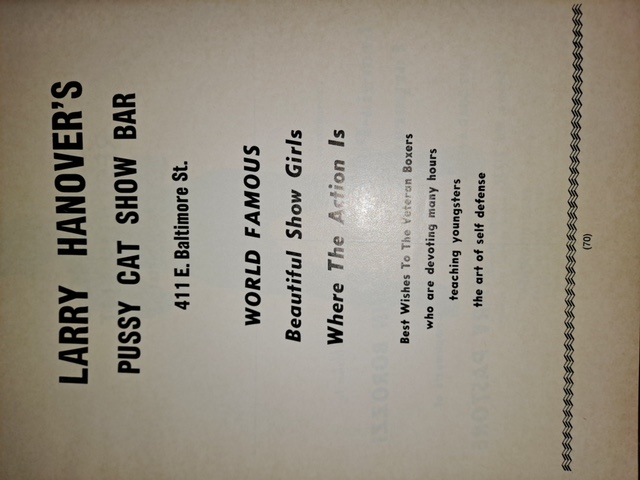
By the 1970s, Eli was known in the entertainment district of East Baltimore Street, where the Jewel Box and its upstairs boxing gym brought his business life and sporting ambitions together. Press profiles emphasized this unusual setting. A full portrait should also describe the people who worked there, the routines of the gym, and how the neighborhood changed during Eli’s lifetime, without reducing him—or Baltimore—to the nightclub setting alone.
 Archive image not available locally
The last years of the promoter
In March 1974, a Sports Illustrated feature by John Schulian brought wider attention to Eli’s role in Baltimore boxing. The research account says he was considering selling the Jewel Box to concentrate on the sport. He continued to support fighters and remained closely associated with Baltimore promotions, but the precise sequence of his final shows, business decisions, and periods of illness remains to be established from contemporary material and family testimony.
The family’s experience
Eli’s health declined in his later years. The project biography reports that relatives attributed his illness to colon cancer; this has not yet been corroborated with a publicly attributable medical or death record. Relatives may wish to share what they remember about his final months, but those accounts should be offered voluntarily, with particular care given to personal and medical details. What mattered at home may not have appeared in the sports pages.
August 19, 1975
Eli “Ted” Hanover died on August 19, 1975. Published accounts describe him as 54 years old, consistent with an April 29, 1921 birth date, although a competing 1929 birth year appears in some family-derived material. Baltimore newspaper notices acknowledged his connection to the city’s fight scene. The supplied biography lists a funeral on August 30 and burial at Mikro Kodesh Beth Israel Cemetery; the funeral date and cemetery details should be checked against the original service notice and cemetery records before publication as definitive.
Remembered by the boxing community
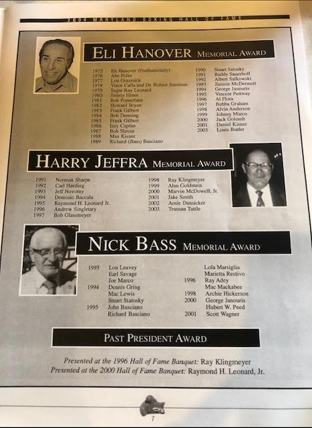
Following Eli’s death, the boxing community kept his name in circulation through the Eli Hanover Award. Our archive contains material documenting the award and a 2008 presentation associated with Lou Benson. The award’s founding organization, first year, criteria, and complete recipient list remain research objectives. Such recognition provides a tangible link between the promotions Eli staged and the people who continued working for Maryland boxing after him.
 Archive image not available locally
A story carried forward
Frances survived Eli and died in 2001, according to the supplied biography. The family archive now holds photographs spanning several generations, including confirmed and tentative identifications. These images can help tell the story of lives lived after 1975—but photographs of living relatives will not be placed on the public site without review. In this chapter, legacy is not only a trophy or a newspaper remembrance. It is also what children, grandchildren, friends, and former fighters choose to remember.
What endures
The record shows Eli as a former boxer, merchant mariner, union worker, and promoter. It also leaves important questions unanswered: what he considered his greatest achievement, how he balanced demanding work with home life, and which moments his friends still recall most vividly. As the oral-history project grows, this final chapter can place those voices alongside the documented public events rather than substitute one for the other.
Closing years · working timeline
- 1974National feature profiles Eli’s Baltimore boxing work.
- 1974–1975Later promotions and plans; individual event dates still being researched.
- August 19, 1975Eli dies in Baltimore, according to supplied historical research.
- After 1975Eli Hanover Award helps preserve his name in regional boxing.
- 2001Death of Frances Hanover, as reported in the research biography.